
Is It Legal to Buy Cheap Windows Keys? What You Need to Know

Callum specializes in breaking down complex technology topics into easy-to-understand guides. He has a background in computer science and technical writing.
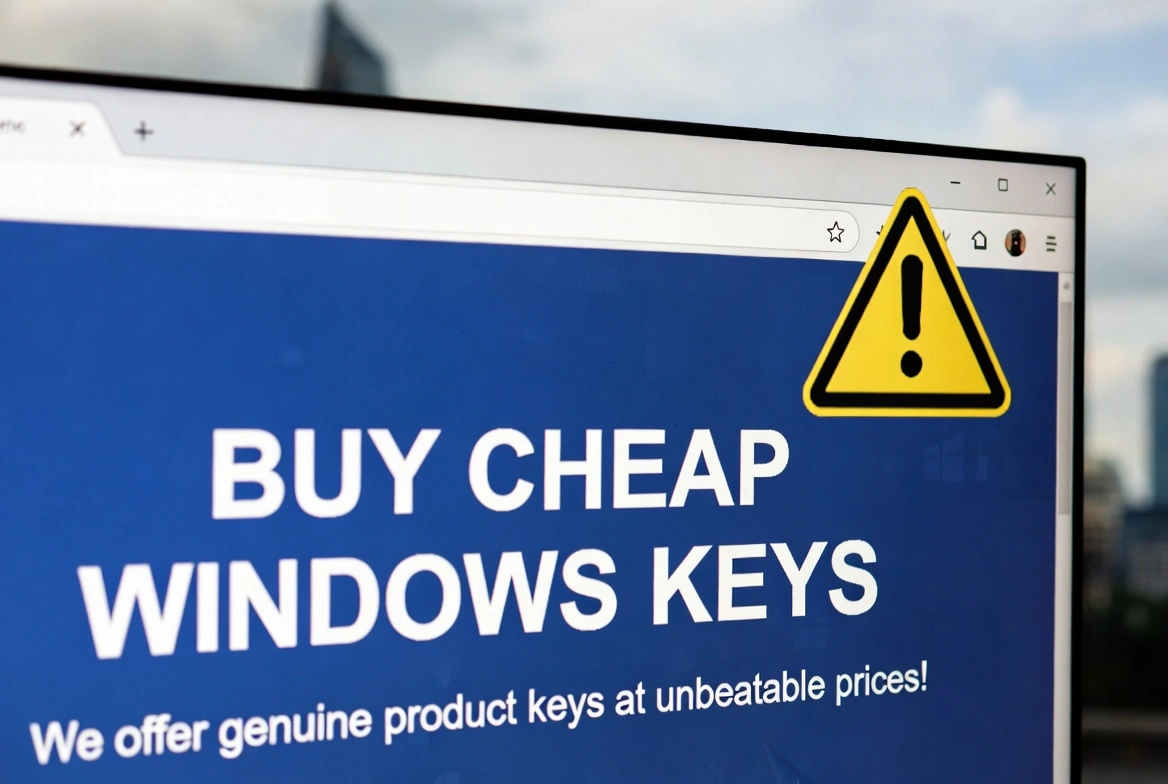
You've seen them everywhere—Windows 11 keys selling for $15 instead of $199. The deal seems too good to pass up, but there's a nagging question in the back of your mind: is it safe to buy cheap Windows 11 keys from third party sellers? And more importantly, is it even legal?
The short answer is: it depends entirely on where you buy and what type of key you're getting. Some cheap keys are perfectly legitimate. Others are ticking time bombs waiting to get deactivated. And a few are outright scams.
I've spent years navigating this market—both as a buyer and as someone who's helped hundreds of users recover from bad purchases. Here's the unfiltered truth about cheap Windows keys, what makes them cheap, and how to buy safely.
Why Are Windows Keys So Cheap on Some Sites?
Before you can evaluate whether a deal is legitimate, you need to understand why are Windows keys so cheap on eBay, Amazon, and various key reseller sites. The price difference isn't random—it reflects the source of the license.
Here's where those cheap keys typically come from:
- OEM licenses: These are bulk keys sold to computer manufacturers at massive discounts. When a PC builder has extras, they sometimes end up resold individually.
- Volume licenses (grey market): Large organizations buy volume licenses meant for internal use. Sometimes employees or contractors resell unused keys—which violates Microsoft's terms but technically still activates.
- Regional pricing arbitrage: Keys purchased in countries with lower pricing (like some parts of Eastern Europe or Asia) and resold internationally.
- Developer/MSDN keys: Keys from Microsoft developer programs meant for testing, not commercial use.
- Straight-up fraud: Stolen credit card purchases, keygen-generated keys, or keys already sold multiple times.
⚠️ The Risk Factor
Keys from categories 2-5 can be deactivated by Microsoft at any time. When that happens, you're stuck with an "Activate Windows" watermark and no recourse.
Are Cheap Windows Keys on Amazon Legit?
This is one of the most common questions, and the answer isn't straightforward. Are cheap Windows keys on Amazon legit? Some are, many aren't—and Amazon's marketplace makes it hard to tell the difference.
Amazon hosts thousands of third-party sellers, and their vetting process for software keys is minimal. The same product listing might have legitimate sellers mixed with grey market dealers.
Red Flags on Amazon and eBay
- Price under $20 for a retail key (Microsoft charges $139-199)
- Seller with limited history or mixed reviews
- Key delivered via email or message rather than physical card
- Listing doesn't specify OEM vs. Retail
- Reviews mentioning "key stopped working after a few months"
Signs of a Legitimate Seller
- Clear indication of license type (OEM or Retail)
- Established seller with consistent positive reviews
- Transparent return/replacement policy
- Price that's discounted but not suspiciously cheap ($30-80 range for OEM)
When considering if it's safe to buy cheap Windows 11 keys from third party sources on major marketplaces, treat Amazon and eBay like any other reseller—the platform name doesn't guarantee authenticity.
OEM vs. Retail Windows 11 Key: The Crucial Difference
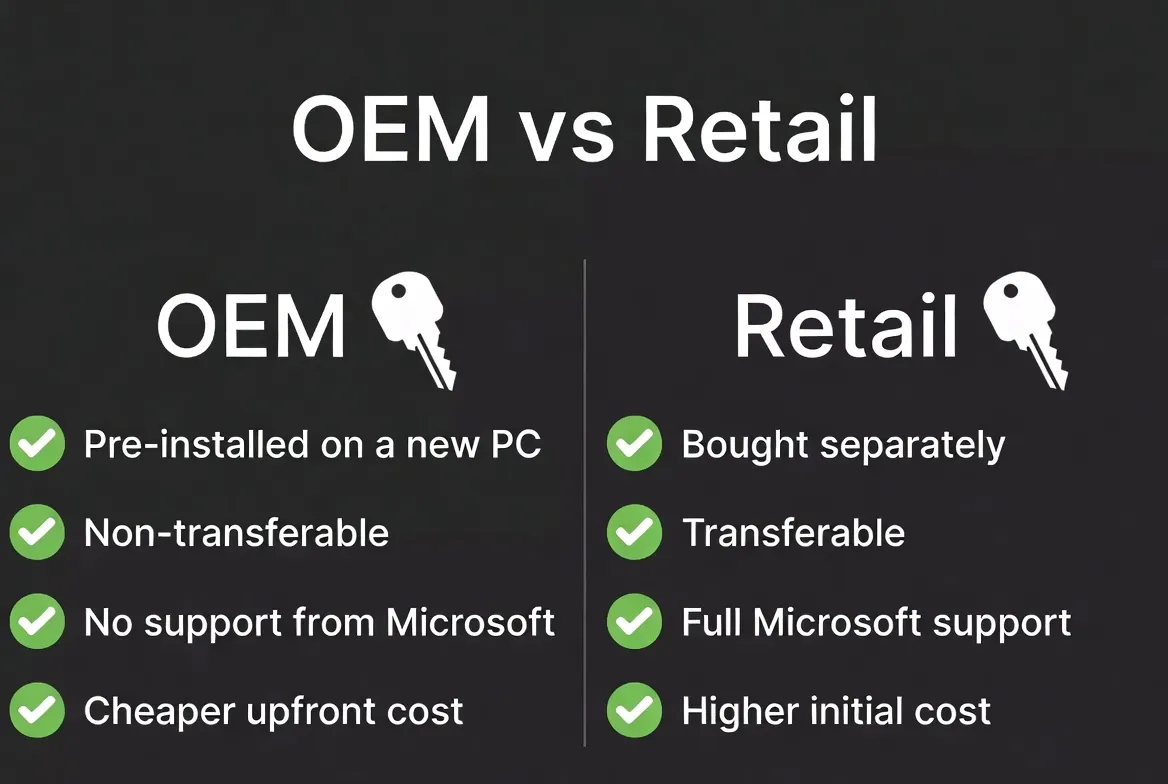
Understanding the difference between OEM and retail Windows 11 key is essential before making any purchase. Both are genuine Microsoft licenses, but they have different rights and restrictions.
| Feature | OEM Key | Retail Key |
|---|---|---|
| Price Range | $15-50 | $80-199 |
| Transferable to New PC | No (tied to first PC) | Yes |
| Microsoft Support | Limited (hardware manufacturer handles) | Full Microsoft support |
| Legal for Resale | Depends on source | Yes |
| Activation | Tied to motherboard | Linked to Microsoft account |
💡 Bottom Line
OEM keys are cheaper because they're non-transferable. If you're building one PC and never plan to upgrade the motherboard, OEM is fine. If you want flexibility, pay more for retail.
The Legal Reality: What Microsoft Actually Says
Let's address the elephant in the room: is buying cheap Windows keys illegal? The answer is nuanced.
Buying an OEM or retail key from a third party is legal. Microsoft doesn't prohibit the resale of genuine licenses. However, Microsoft does prohibit the resale of:
- Volume licenses (meant for organizations only)
- MSDN/developer keys (testing purposes only)
- Keys obtained through fraud or theft
- Keys that violate regional licensing terms
Here's the catch: as a buyer, you often can't tell if a key falls into one of these categories until Microsoft deactivates it. The key might work perfectly for months or even years before getting flagged.
So while you won't face legal consequences for buying a cheap key in good faith, you might lose access to your Windows installation with no refund or recourse. That's the real risk when evaluating if it's safe to buy cheap Windows 11 keys from third party sources.
How to Buy a Cheap Windows Key Safely
Now for the practical part. You don't have to pay Microsoft's full retail price, but you need to shop smart. Here's my tested approach:
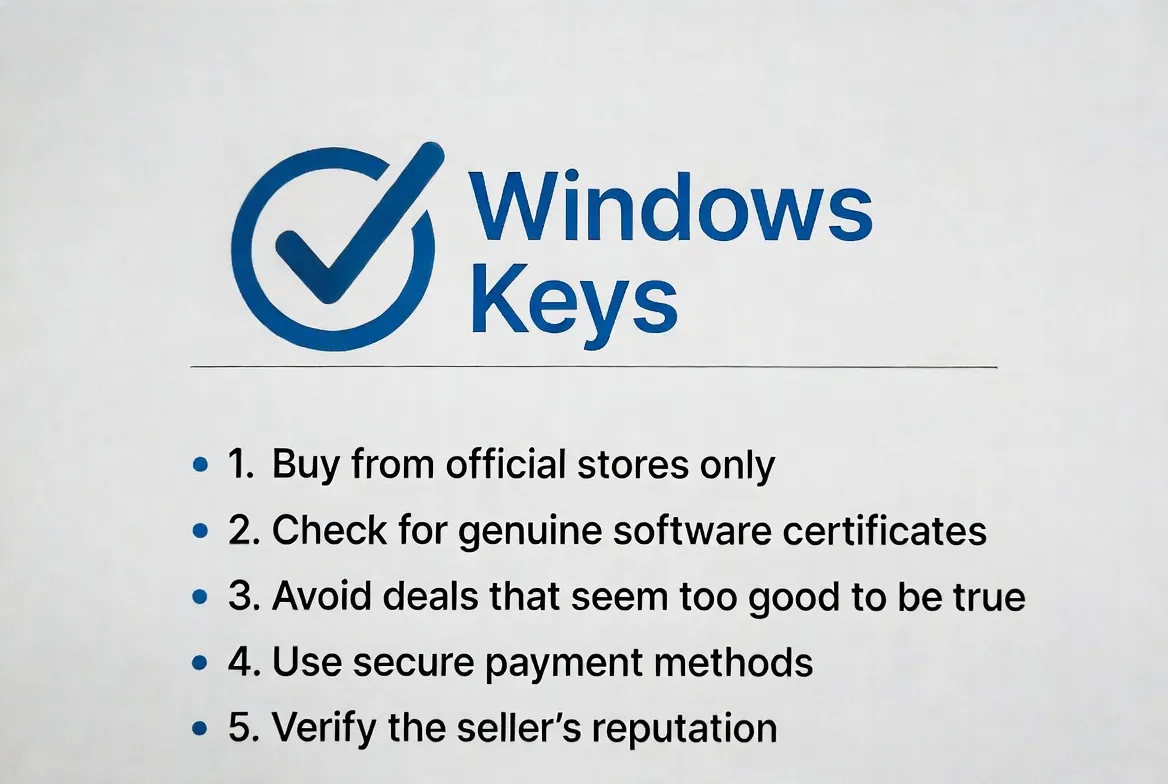
1. Stick to Authorized Resellers
The safest cheap keys come from authorized Microsoft partners who source OEM licenses legitimately. These resellers typically:
- Offer genuine OEM or retail keys at 70-90% off Microsoft's direct pricing
- Provide activation guarantees and customer support
- Have verifiable business histories and customer reviews
- Deliver keys instantly via secure methods
2. Verify Before You Buy
Before purchasing from any site, check:
- Independent reviews on Trustpilot or similar platforms
- Return policy in case the key doesn't work
- Contact information and responsive customer support
- Payment protection (PayPal, credit card with chargeback rights)
3. Understand What You're Buying
Always confirm whether you're getting an OEM or retail key. Don't assume based on price alone—some sellers are vague intentionally. If the listing doesn't clearly state the license type, ask before purchasing.
Where to Get a Genuine Windows Key
If you're looking for a legitimate Windows 11 key at a fair price, we offer verified OEM and retail licenses with instant delivery and activation guarantee.
View Windows 11 Pro Lifetime Key →What Happens If Your Key Gets Deactivated?
If Microsoft flags your key as invalid, you'll see the "Activate Windows" watermark appear on your desktop. Your Windows installation will continue working, but:
- Personalization options become locked (wallpaper, colors, themes)
- You'll see persistent activation reminders
- Some features may become restricted over time
- Your system will feel "nag-ware" constantly pushing activation
Your options at that point are limited:
- Contact the seller for a replacement (if they offer guarantees)
- Dispute the charge with your payment provider (within time limits)
- Purchase a legitimate key to properly activate Windows
This is why buying from sellers with activation guarantees matters. A reputable seller will replace a non-working key at no extra cost.
Frequently Asked Questions
Can Microsoft detect if I'm using a cheap key?
Microsoft validates keys during activation and periodically checks license status. If a key is flagged as volume license abuse, already used, or obtained fraudulently, it can be deactivated remotely.
Will I get in trouble for using a grey market key?
No. Microsoft's enforcement targets sellers, not individual buyers. The worst that happens to you is losing your activation—not legal action.
Why does the same key work for some people and not others?
Volume and resold keys sometimes work for the first few users and then get flagged when Microsoft's systems detect unusual activation patterns across different hardware.
Is it worth paying more for a retail key?
If you plan to upgrade your PC's motherboard or transfer Windows to a new machine, yes. OEM keys die with the original hardware. Retail keys can be reactivated indefinitely.
What's the safest price range for a legitimate cheap key?
For OEM keys, $15-50 from reputable sellers is reasonable. Retail keys at $60-100 are fair discounts. Anything under $10 is almost certainly problematic.
Final Verdict: Should You Buy a Cheap Windows Key?
The question isn't really whether it's safe to buy cheap Windows 11 keys from third party sellers—it's whether you're buying from the right third party.
Cheap keys exist because of legitimate market dynamics like OEM licensing and regional pricing. The danger comes from sellers exploiting grey market sources or outright fraud. Your job as a buyer is to distinguish between the two.
My recommendation: Buy from established resellers with clear return policies, verified reviews, and activation guarantees. Pay a bit more than the absolute cheapest option—the $15-30 range is the sweet spot for OEM keys. Avoid random eBay sellers, suspicious Amazon listings, and any site that feels sketchy.
A genuine Windows key is a one-time purchase that should last the life of your PC. Saving $10 isn't worth the headache of deactivation six months later. Shop smart, verify your source, and you'll get a legitimate license at a fair price.